

Is Vancouver a Good Place to Live in 2026?
Vancouver Living, Cost Of Living, Moving To Vancouver
Is Vancouver, BC a Good Place to Live in 2026?
Thinking about moving to Vancouver in 2026? Here’s a balanced, up‑to‑date look at Vancouver Living—from the stunning scenery and vibrant culture to the very real Cost Of Living and housing pressures—so you can decide whether 2026 Vancouver fits your lifestyle, priorities, and budget.
So, Is Vancouver a Good Place to Live in 2026?
The honest answer: yes—if the lifestyle and climate match your values, and you can handle the costs. Vancouver consistently ranks among Canada’s most desirable cities for quality of life, access to nature, safety, and cultural diversity. At the same time, it remains one of the country’s most expensive housing markets, and that reality shapes almost every aspect of Vancouver Living in 2026.
For many people, 2026 Vancouver is about trade‑offs: you might live in a smaller space or farther from downtown in exchange for ocean views, mountain hikes, and a relaxed, outdoors‑oriented Vancouver Lifestyle. Understanding those trade‑offs clearly is the key to deciding whether moving to Vancouver is right for you.
Vancouver Living in 2026: What Daily Life Really Feels Like
Daily life in Vancouver tends to revolve around three pillars: nature, neighbourhoods, and a slower, health‑focused pace. Even in the heart of downtown, you’re rarely more than 20–30 minutes from a beach, a forest trail, or a seawall walk. This close connection to the outdoors is a defining feature of Vancouver Lifestyle and a major reason people accept higher costs to live here.
The city’s Greenest City Action Plan aims to make Vancouver the greenest city in the world by 2026, which shows up in extensive bike lanes, composting programs, and an emphasis on public transit and walkability. You see it in everyday habits: people cycling to work year‑round, reusable coffee cups everywhere, and a strong culture of local, sustainable food. If you value environmental responsibility, 2026 Vancouver aligns closely with those priorities.
The Cost Of Living in Vancouver: 2026 Snapshot
Any realistic look at moving to Vancouver has to start with the numbers. Multiple 2026 sources agree that housing is the single biggest driver of the Cost Of Living, while groceries, utilities, and transit are high but broadly comparable to other large Canadian cities.
For a single person, total monthly costs including rent typically fall between C$3,500 and C$5,000, depending on neighbourhood, housing type, and lifestyle, according to 2026 estimates from WealthNorth and Canooq.
A couple is more likely to spend in the C$5,000–$7,000 range each month, especially if renting a one‑bedroom or small two‑bedroom apartment.
A family of four can expect monthly costs of roughly C$6,000–$9,000, with housing again being the key variable.
Rent for a one‑bedroom apartment commonly sits between C$2,300 and C$3,300, with central areas like Yaletown or Coal Harbour at the higher end (Numbeo, Canooq, 2026). Shared housing is cheaper—Canooq estimates C$3,000–$4,500 per month all‑in for someone living with roommates—but still far from “cheap” by national standards.
Groceries and dining out also add up. Expatistan’s mid‑2026 data shows a basic lunch around C$24 and a fast‑food combo at C$15. A single person might spend close to C$880 per month on food, while a family may be closer to C$2,280 (Livingcost.org, 2026). Utilities are relatively modest—often around C$100–$150 per month for electricity and heat, and roughly C$80–$90 for internet—but they don’t offset the high cost of rent or mortgage payments.
📌 Key Takeaway: Vancouver’s Cost Of Living in 2026 is among the highest in Canada, and housing is the main reason. If your income is flexible or you’re relocating with a strong salary, the lifestyle can absolutely be worth it—but you’ll want to budget carefully.
Vancouver Lifestyle: Nature, Culture, and Work–Life Balance
One of the biggest draws of Vancouver Living is how easily you can combine an urban career with an outdoors‑centric lifestyle. Within a single weekend you might:
Run or cycle along the Seawall in Stanley Park
Ski or snowboard on Grouse, Cypress, or Seymour in winter, or hike them in summer
Explore diverse food scenes in neighbourhoods like Commercial Drive, Mount Pleasant, or Richmond (just outside the city)
Culturally, 2026 Vancouver continues to be shaped by its diversity. Tourism Vancouver highlights a rich mix of festivals, galleries, theatre, and live music, from the Celebration of Light fireworks to the Vancouver International Film Festival. This multicultural fabric shows up in everything from local schools to the restaurant scene, making it an appealing place if you value openness and global influences.
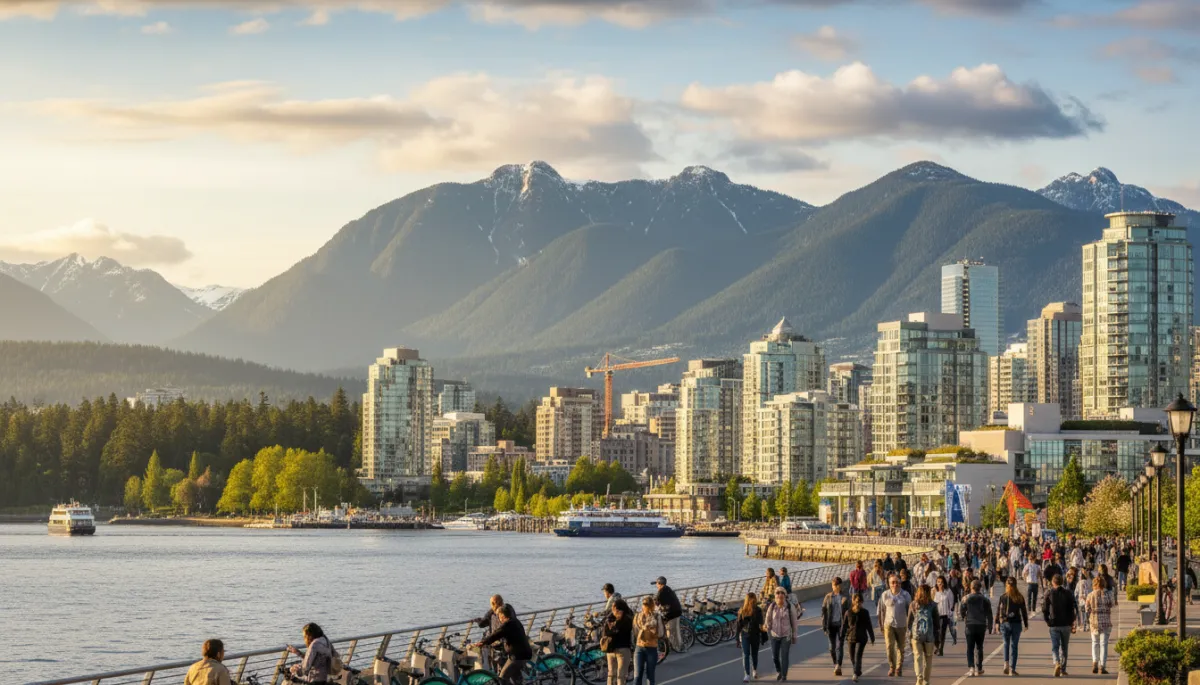
Everyday Vancouver Lifestyle blends walkable streets, local cafes, and quick access to nature.
Vancouver Neighborhoods: Finding Your Fit in 2026
One of the strengths of 2026 Vancouver is the variety of Vancouver Neighborhoods, each with a distinct feel and price point. Whether you’re a student, professional, or family, there’s likely a corner of the city that matches your priorities—if not always your ideal budget.
More Affordable and Up‑and‑Coming Areas
“Affordable” is relative in Vancouver, but some neighbourhoods offer better value:
Collingwood in East Vancouver features strong SkyTrain access and a median condo price around C$550,000 as of early 2026 (Zealty). It appeals to first‑time buyers and renters looking for a balance of cost and connectivity.
Marpole in South Vancouver mixes older houses with newer condos and townhomes, with a median price around C$918,000—still high, but more attainable than many Westside areas.
Renfrew offers relatively lower‑priced detached or semi‑detached homes (median around C$1.38M), plus quick access to Hastings Park and transit.
Urban, Walkable, and Social Hubs
If your vision of Vancouver Living centres on walkability, cafes, and nightlife, consider:
The West End, one of the city’s most walkable areas, with a median condo price around C$659,000. You’re steps from English Bay Beach, Stanley Park, and Robson Street shopping.
Mount Pleasant, known for its creative energy, breweries, and independent shops. Condo prices often range between C$550,000 and C$720,000, with townhouses pushing past C$1M (WealthNorth).
Yaletown, a downtown favourite for young professionals, where one‑bedroom rents typically land in the C$2,500–$3,200 range. In exchange, you get waterfront paths, trendy restaurants, and easy transit.
Family‑Friendly and School‑Focused Neighbourhoods
For families, school catchments, parks, and a quieter pace often matter more than nightlife:
Dunbar is prized for top‑rated schools like Lord Byng Secondary and leafy residential streets. The median sold price sits around C$2.61M, reflecting its popularity and limited supply (Zealty).
Kerrisdale offers a village‑like shopping strip, strong schools, and a quieter, upscale feel, with median prices around C$1.63M.
Cambie combines family‑friendly streets with rapid transit on the Canada Line and proximity to Queen Elizabeth Park. Median prices hover around C$1.18M, and homes tend to sell quickly.
Luxury, Views, and Prestige
If budget is less of a constraint, 2026 Vancouver offers some of the most coveted addresses in Canada:
Shaughnessy, with grand heritage homes and tree‑lined streets, has a median sold price around C$5.15M.
Point Grey offers ocean views, proximity to UBC, and access to beaches and forests, with median prices around C$2.58M.
Coal Harbour delivers luxury condo living on the waterfront, with median prices around C$1.54M and some of the best harbour and mountain views in the city.
Moving To Vancouver in 2026: Practical Considerations
If you’re seriously considering moving to Vancouver, planning ahead will make a huge difference in how smoothly you settle in—and how comfortable Vancouver Living feels in your first year.
1. Budget for Housing First
Start by deciding what portion of your income you’re comfortable dedicating to rent or a mortgage. In 2026, it’s common for newcomers to spend 35–40% of their take‑home pay on housing, sometimes more. Look at realistic ranges:
Room in a shared place: around C$1,100–$1,700 per month
Studio or basement suite: roughly C$1,800–$2,500
One‑bedroom apartment: typically C$2,300–$3,300
2. Consider Car‑Free or Car‑Light Living
With monthly transit passes around C$110–$180 depending on zones, and car costs (insurance, fuel, parking) easily exceeding C$500 per month, many residents opt for car‑free living. Choosing a SkyTrain‑connected neighbourhood—like Commercial Drive, Mount Pleasant, or areas along the Canada Line—can significantly reduce your transportation costs and stress.
3. Embrace Smaller Spaces and Shared Amenities
Compared with many North American cities, typical homes and condos in Vancouver are smaller. Many new arrivals adjust by prioritizing building amenities—rooftop decks, gyms, shared lounges—or by spending more of their free time in nearby parks and public spaces. If you’re flexible about square footage, you’ll find it easier to enjoy the broader Vancouver Lifestyle without feeling squeezed.
Final Verdict: Is 2026 Vancouver Right for You?
In 2026, Vancouver is a city of contrasts: breathtakingly beautiful, safe, and progressive, yet undeniably expensive. It’s a good place to live if you:
Value access to nature and an active, outdoors‑oriented Vancouver Lifestyle
Appreciate cultural diversity, sustainability, and a generally relaxed pace of life
Have (or can secure) an income that comfortably supports a high Cost Of Living
On the other hand, if your top priorities are large living spaces, low housing costs, or hot, sunny weather year‑round, 2026 Vancouver may feel like a compromise. Many residents accept smaller homes and higher bills in exchange for the city’s natural setting, social attitudes, and quality of life.
Ultimately, deciding whether moving to Vancouver is right for you in 2026 comes down to alignment: Does the lifestyle match what you want day‑to‑day, and can your finances support it without constant strain? If the answer to both is yes, Vancouver can be a deeply rewarding place to call home—now and for years to come.